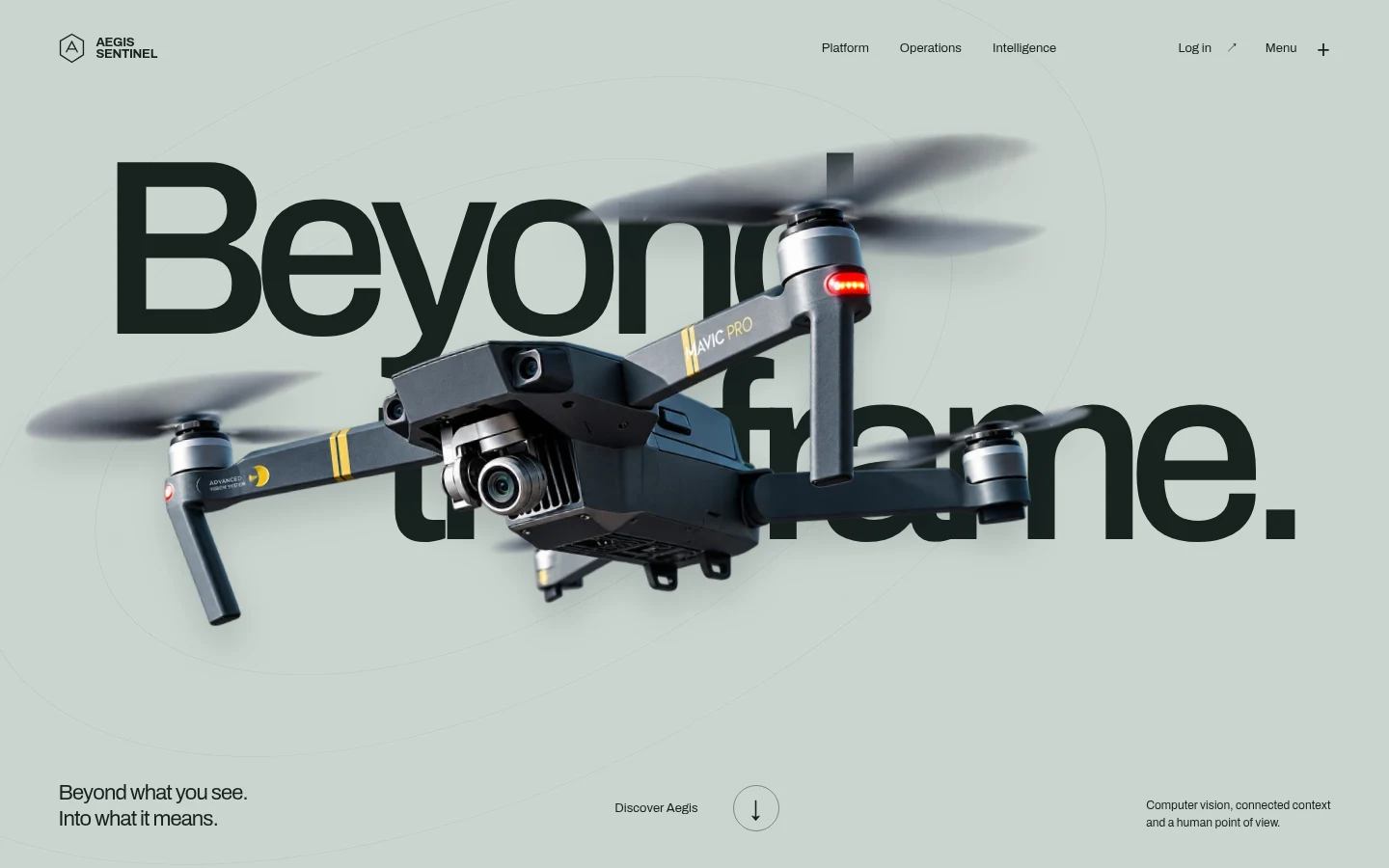
The interface had to connect visual intelligence with the slower, more careful work of examining evidence. We shaped the experience around the person asking what an observation actually supports.

What happens after the camera notices something?
An observation needs a source, a history and a person who can question it. We shaped the product around that journey, keeping machine inference separate from human judgment.
Every screen.
The same intention.
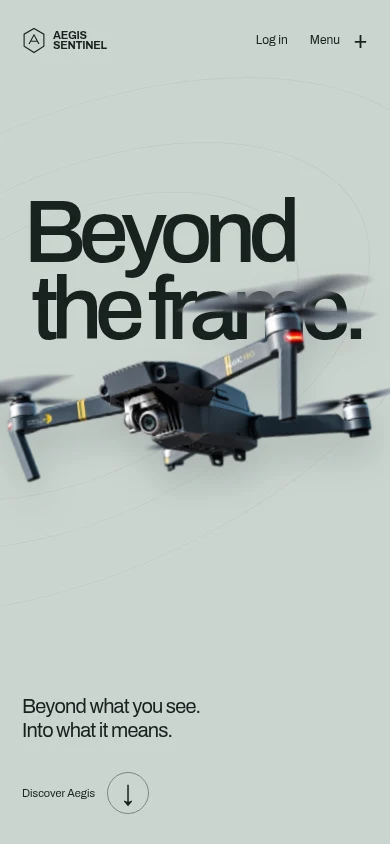
The experience is reworked for a smaller screen, with the same care for the journey. Explore the live site or open it in your browser.
Follow the decision.
Observation
↗Inference
↗Case record
↗Human review
↗Evidence
A simplified illustration of the product workflow.
Keep the source.
Turn the page.
An observation gains a history.
Explore the illustrative evidence journal.
Source → Retained artifactThe source stays.
The original capture remains the point of reference. Every later interpretation points back to this record.
1 / 3Keep the original in view.
Detection is a starting point. The observation stays connected to its source material as it moves into a case, so a reviewer can return to what was captured rather than rely on a generated description.
Give evidence a memory.
Evidence records and custody events preserve the relationship between an artifact and the actions taken around it. Integrity checks make that history inspectable instead of asking a reviewer to take it on trust.
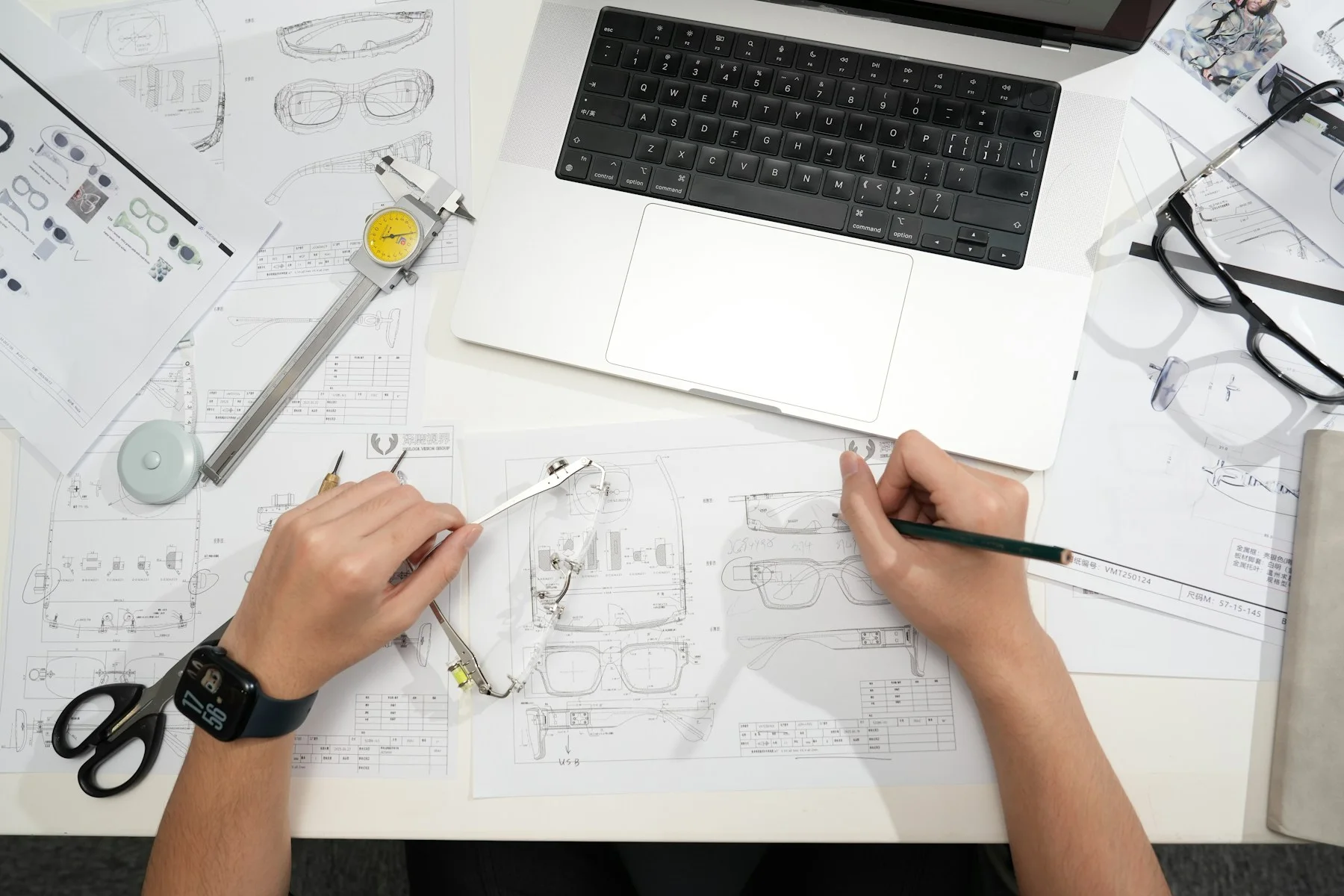
Leave room for judgment.
Model evaluation and review belong inside the product story. An inference carries uncertainty. The interface gives a person the context to investigate before deciding what the observation means.
separate the model output from the evidence record. Predictions can be reviewed without rewriting the source material that made the review possible.
What could we build for you? ↗